

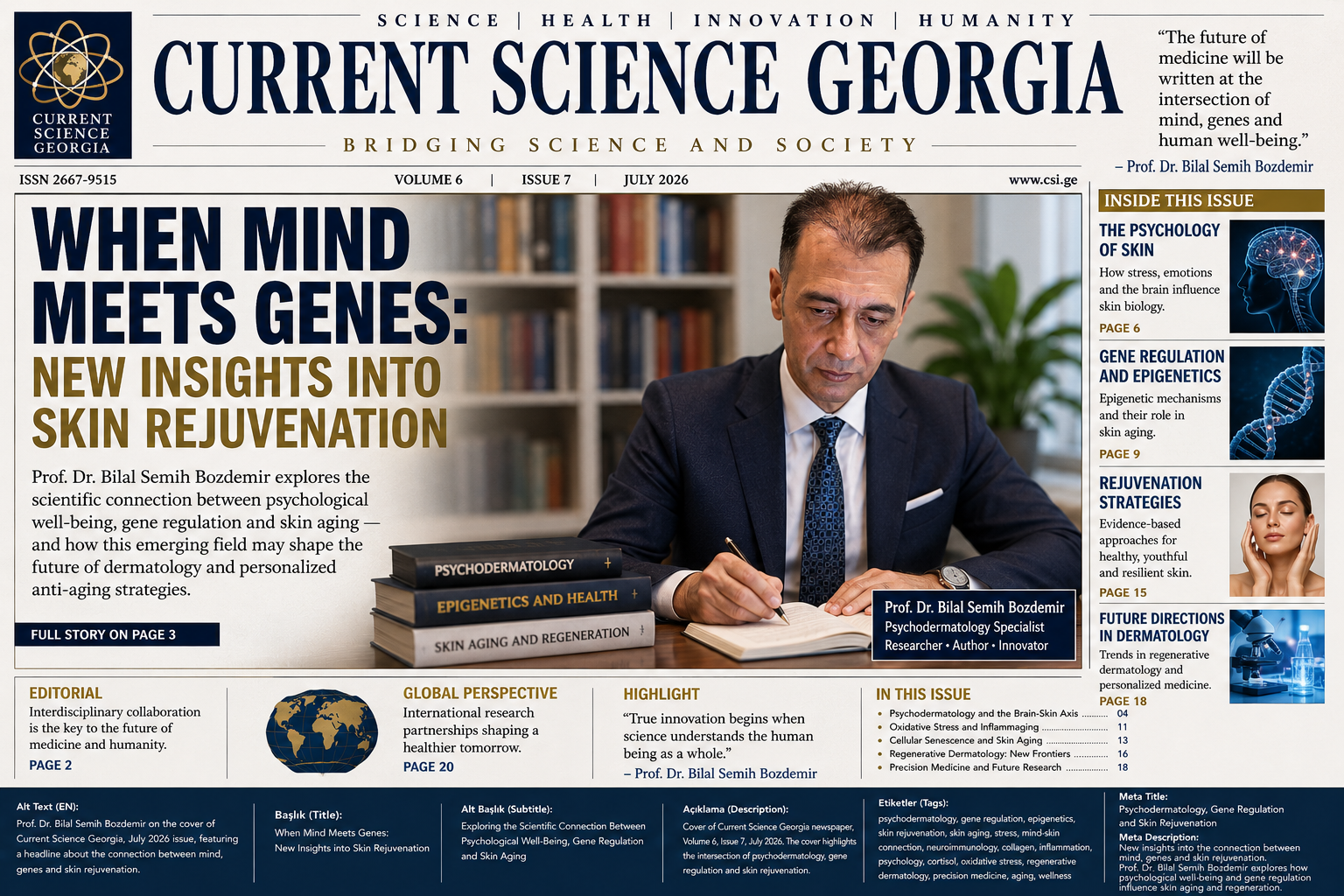
Author
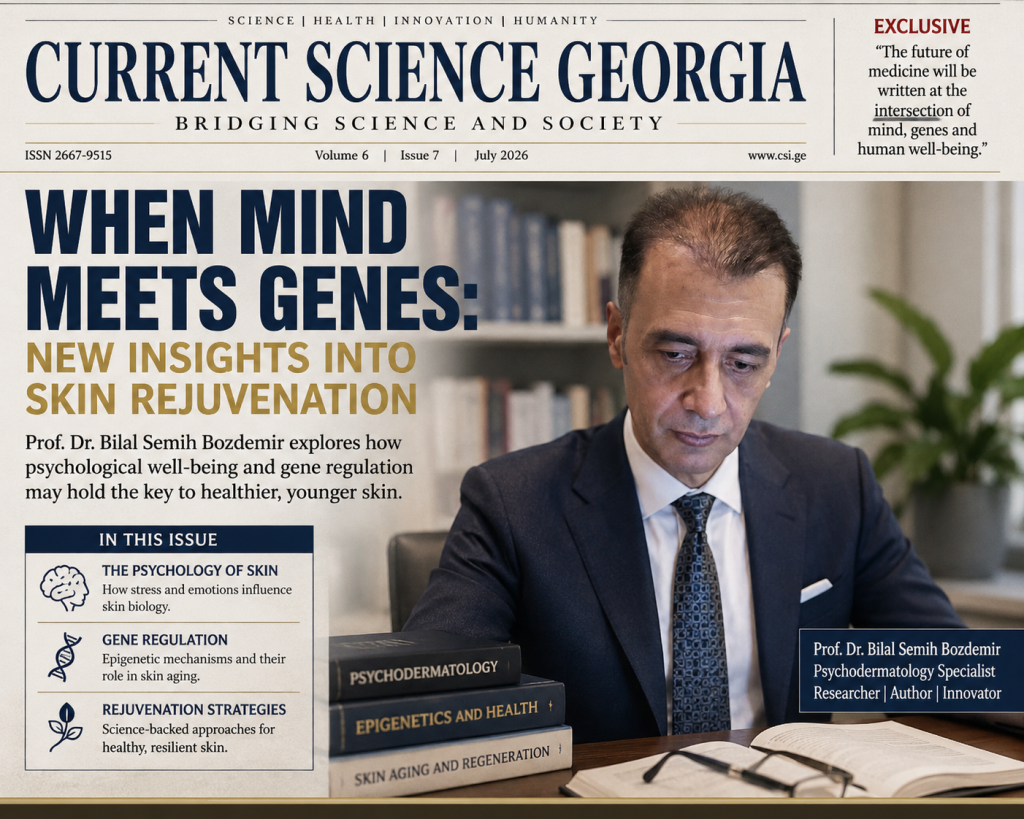
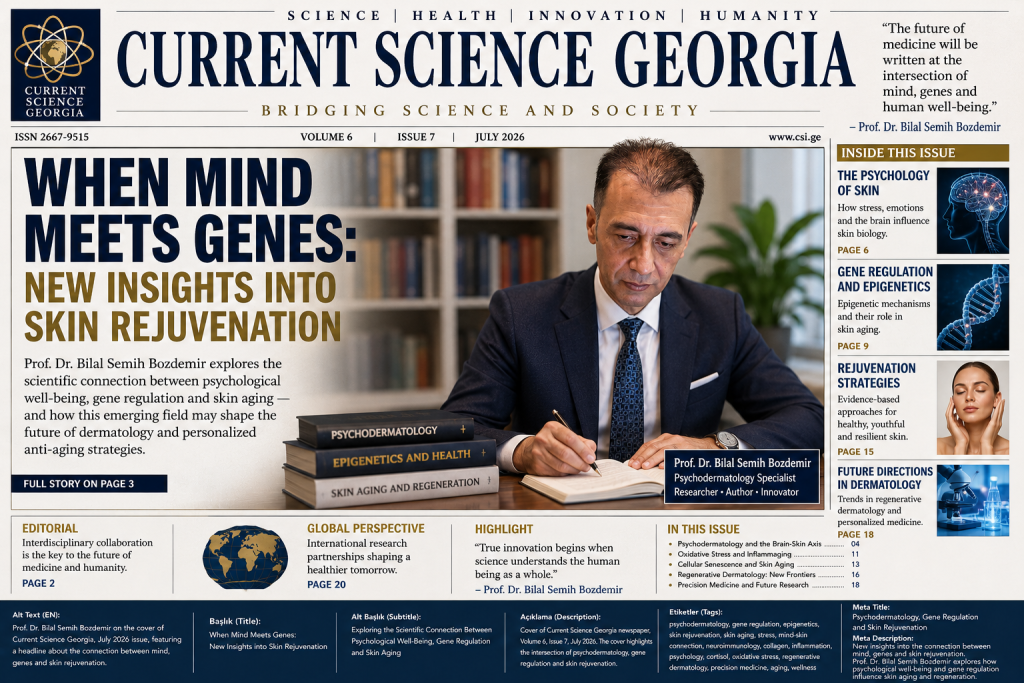
Prof. Dr. Bilal Semih Bozdemir
Psychodermatology Specialist
Current Science Georgia
Corresponding Author
Prof. Dr. Bilal Semih Bozdemir
Current Science Georgia
Email: pressgrup001@gmail.com
Abstract
Psychodermatology has evolved into an increasingly important interdisciplinary field connecting dermatology, neuroscience, psychiatry, psychology, immunology, and molecular biology. Recent scientific advances suggest that the relationship between psychological health and skin physiology extends far beyond behavioral influences, involving complex neuroendocrine, immunological, inflammatory, and epigenetic pathways. Simultaneously, research in regenerative medicine and molecular dermatology has highlighted the critical role of gene regulation in maintaining skin homeostasis, extracellular matrix remodeling, collagen synthesis, cellular senescence, and tissue regeneration. These developments have raised growing interest in understanding whether psychological factors may indirectly influence biological pathways associated with skin aging and rejuvenation. Although many molecular mechanisms remain under investigation, current evidence indicates that stress-related hormonal responses, inflammatory cytokines, oxidative stress, mitochondrial dysfunction, and epigenetic modifications collectively contribute to cutaneous aging. Conversely, improvements in psychological well-being, stress management, and healthy behavioral adaptation may positively affect biological systems involved in tissue repair and skin maintenance. This review summarizes current knowledge regarding psychodermatology, gene regulation, epigenetic mechanisms, neuro-immuno-cutaneous interactions, and skin rejuvenation while discussing future research directions and potential clinical applications.
Keywords
Psychodermatology; Skin Rejuvenation; Epigenetics; Gene Regulation; Dermatology; Stress Biology; Cortisol; Skin Aging; Neuroimmunology; Inflammaging; Cellular Senescence; Oxidative Stress; Extracellular Matrix; Collagen; Regenerative Dermatology; Mind-Skin Connection; Precision Medicine; Skin Homeostasis.
1. Introduction
The skin is the largest organ of the human body and functions not only as a protective physical barrier but also as an active neuro-immuno-endocrine interface. Increasing scientific evidence demonstrates that psychological processes influence numerous physiological systems through complex neuroendocrine signaling pathways. Consequently, dermatological diseases are increasingly recognized as conditions that may both affect and be affected by emotional, psychological, and behavioral factors.
Psychodermatology has therefore become a multidisciplinary discipline integrating dermatology, psychiatry, psychology, neuroscience, endocrinology, immunology, and behavioral medicine. While its traditional focus has centered on disorders such as psoriasis, atopic dermatitis, acne vulgaris, alopecia areata, chronic urticaria, vitiligo, and psychogenic skin diseases, recent research has expanded toward molecular dermatology, skin aging, regenerative medicine, and gene regulation.
At the molecular level, skin aging represents a multifactorial biological process involving intrinsic genetic programs, environmental exposure, ultraviolet radiation, oxidative damage, chronic inflammation, mitochondrial dysfunction, hormonal regulation, extracellular matrix degradation, and epigenetic remodeling. Rather than being governed by a single mechanism, cutaneous aging results from the interaction of numerous biological networks operating simultaneously throughout life.
2. The Skin–Brain Axis
The concept of the skin–brain axis has emerged as one of the most important theoretical frameworks in modern psychodermatology. The skin and nervous system share a common embryological origin from the ectoderm, providing a developmental basis for their extensive biological communication.
Psychological stress activates the hypothalamic–pituitary–adrenal (HPA) axis, resulting in increased secretion of corticotropin-releasing hormone, adrenocorticotropic hormone, and cortisol. Simultaneously, sympathetic nervous system activation increases catecholamine release while peripheral sensory nerves secrete neuropeptides including substance P, calcitonin gene-related peptide, and neurokinins.
These mediators influence:
- epidermal barrier integrity,
- sebaceous gland activity,
- keratinocyte proliferation,
- fibroblast function,
- mast cell activation,
- cytokine production,
- wound healing,
- collagen metabolism,
- angiogenesis,
- immune surveillance.
Consequently, chronic psychological stress may contribute to delayed tissue repair, increased inflammatory activity, impaired extracellular matrix remodeling, and accelerated biological aging.
3. Gene Regulation and Skin Homeostasis
Gene regulation controls virtually every biological process involved in skin maintenance and regeneration. Multiple signaling pathways regulate epidermal differentiation, dermal remodeling, melanogenesis, collagen synthesis, elastin production, fibroblast activation, and extracellular matrix turnover.
Key molecular pathways include:
- TGF-β signaling
- Wnt/β-catenin pathway
- MAPK signaling
- PI3K/AKT pathway
- NF-κB activation
- mTOR signaling
- FOXO transcription factors
- Sirtuin pathways
- AMPK regulation
These pathways interact dynamically in response to environmental stimuli, oxidative stress, inflammatory mediators, hormonal signals, and cellular metabolic status.
Gene expression within the skin is therefore highly responsive rather than genetically predetermined alone.
4. Epigenetic Regulation
Epigenetic regulation refers to heritable modifications in gene expression that occur without altering DNA sequence.
Major epigenetic mechanisms include:
- DNA methylation
- Histone acetylation
- Histone methylation
- Chromatin remodeling
- MicroRNA regulation
- Long non-coding RNAs
Accumulating evidence suggests that environmental stressors—including psychological stress—may influence certain epigenetic regulatory processes.
Although direct causal relationships between psychological interventions and clinically meaningful skin rejuvenation remain insufficiently established, several experimental studies indicate that stress reduction may influence biological markers associated with inflammation and cellular aging.
5. Oxidative Stress and Cellular Aging
Reactive oxygen species represent one of the principal drivers of intrinsic and extrinsic skin aging.
Excess oxidative stress contributes to:
- collagen degradation,
- elastin fragmentation,
- mitochondrial dysfunction,
- fibroblast senescence,
- DNA damage,
- impaired stem cell function,
- extracellular matrix remodeling.
Psychological stress has been associated with increased oxidative burden through neuroendocrine activation and chronic inflammatory signaling.
Conversely, behavioral interventions that reduce chronic stress may indirectly support physiological systems responsible for maintaining tissue integrity.
6. Inflammaging
The concept of inflammaging describes chronic low-grade systemic inflammation that accompanies aging.
Key inflammatory mediators include:
- IL-1β
- IL-6
- IL-17
- TNF-α
- IFN-γ
- C-reactive protein
Persistent activation of inflammatory pathways promotes extracellular matrix degradation, collagen loss, reduced fibroblast function, vascular dysfunction, and impaired regenerative capacity.
Stress-related activation of inflammatory cytokines provides one potential biological link between psychodermatology and skin aging.
7. Cellular Senescence
Cellular senescence represents a stable state of irreversible cell cycle arrest accompanied by the senescence-associated secretory phenotype (SASP).
Senescent fibroblasts release inflammatory mediators capable of altering surrounding tissue microenvironments and accelerating biological aging.
Potential therapeutic approaches currently under investigation include:
- senolytics,
- senomorphics,
- regenerative peptides,
- stem-cell-based therapies,
- extracellular vesicles,
- exosome technology,
- epigenetic modulation.
Many of these interventions remain experimental and require additional clinical validation.
8. Clinical Perspectives
Current clinical evidence supports comprehensive management strategies integrating:
- dermatological treatment,
- psychological assessment,
- stress reduction,
- behavioral medicine,
- sleep optimization,
- nutritional counseling,
- physical activity,
- individualized skin care.
Such multidisciplinary approaches may improve patient quality of life while supporting overall skin health.
However, claims regarding direct psychological induction of skin rejuvenation should be interpreted cautiously until supported by high-quality randomized clinical trials.
9. Future Research Directions
Future investigations should explore:
- longitudinal psychodermatology cohorts,
- molecular biomarkers,
- epigenetic signatures,
- neuroimmune signaling,
- precision dermatology,
- AI-assisted dermatological prediction,
- multi-omics integration,
- regenerative medicine,
- personalized skin aging models.
Interdisciplinary collaboration will be essential for translating laboratory findings into evidence-based clinical practice.
10. Limitations
Current evidence demonstrates important biological associations but does not establish that psychological interventions alone can reverse aging or directly induce clinically significant skin rejuvenation.
Many mechanistic studies remain experimental, and human clinical evidence is still developing.
Interpretation should therefore remain scientifically cautious while encouraging further investigation.
11. Conclusion
Psychodermatology represents one of the fastest-growing interdisciplinary fields in contemporary medicine. Increasing knowledge of neuroendocrine regulation, inflammatory biology, gene expression, epigenetic modulation, and regenerative dermatology has substantially expanded our understanding of the skin–brain connection. Available evidence supports the concept that psychological health influences numerous biological systems relevant to skin physiology through indirect molecular mechanisms involving stress biology, immune regulation, oxidative balance, and epigenetic remodeling. Although many causal pathways remain incompletely understood, the integration of psychodermatology with molecular genetics, precision medicine, regenerative biology, and artificial intelligence offers promising opportunities for future research. Continued multidisciplinary investigation may contribute to more comprehensive preventive, diagnostic, and therapeutic strategies aimed at promoting healthy skin aging while improving both dermatological and psychological well-being.
References (Suggested)
- Arck PC, Slominski A, Theoharides TC, et al. Neuroimmunology of Stress and Skin.
- Slominski A, Zmijewski MA, Paus R.
- Gilchrest BA.
- Farage MA.
- Krutmann J.
- WHO Healthy Ageing Reports.
- Nature Reviews Molecular Cell Biology.
- Journal of Investigative Dermatology.
- Experimental Dermatology.
- Frontiers in Medicine (Psychodermatology and Skin Aging Reviews).