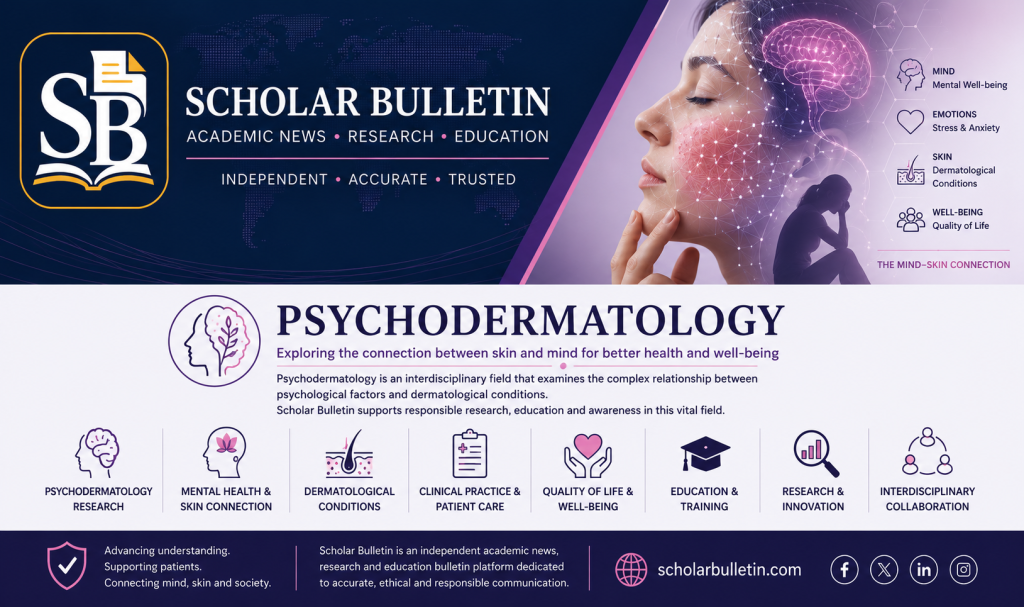
Scholar Bulletin’s Psychodermatology section is dedicated to publishing selected academic updates, research summaries, educational materials and public-interest articles related to the relationship between skin health, psychology, emotional well-being, stress, behavior and clinical dermatology.
Psychodermatology is an interdisciplinary field that explores how psychological factors may influence skin conditions and how dermatological conditions may affect emotional, social and psychological well-being. This section provides a professional publication space for responsible academic communication at the intersection of dermatology, psychology, mental health, clinical education and public awareness.
What This Section Covers
The Psychodermatology section may include:
Psychodermatology research updates
Stress and skin health-related academic content
Dermatology and mental health articles
Body image and self-esteem discussions
Acne, vitiligo, psoriasis and eczema-related psychosocial content
Clinical psychology and dermatology intersections
Patient communication and quality of life topics
Psychological burden of chronic skin conditions
Medical education updates related to dermatology and psychology
Public-interest awareness articles
Academic commentary and research summaries
Conference and seminar announcements
Journal and publication updates
Interdisciplinary health research news
Scholar Bulletin aims to present these subjects in a responsible, accessible and academically informed format.
The Mind-Skin Connection
Skin conditions may affect more than physical appearance. They may influence self-confidence, social interaction, emotional well-being, identity, body image, relationships and quality of life.
At the same time, stress, anxiety, emotional distress and behavioral patterns may play a role in how certain skin-related problems are experienced, perceived or managed.
Psychodermatology provides a framework for understanding these interactions. Scholar Bulletin’s Psychodermatology section aims to support responsible discussion of the mind-skin connection without exaggeration, fear-based language or unsupported clinical claims.
Editorial Focus
This section is not intended to provide personal medical advice, diagnosis or treatment recommendations. Content published under Psychodermatology is intended for academic, informational, educational and editorial purposes.
Our editorial focus includes:
Responsible discussion of skin and mental health
Academic relevance
Clinical and educational clarity
Public-interest value
Avoidance of unsupported medical claims
Respectful language about patients and conditions
Interdisciplinary understanding
Ethical and legal suitability
Clear distinction between information and medical advice
Scholar Bulletin may edit, shorten, categorize, request clarification or decline psychodermatology-related submissions when necessary.
Types of Submissions Accepted
Scholar Bulletin may consider psychodermatology-related submissions from:
Researchers
Dermatology professionals
Psychologists and mental health professionals
Medical educators
Universities
Research centers
Academic journals
Health and psychology-related institutions
Conference organizers
Public health initiatives
Independent authors with responsible academic or public-interest content
Submissions may include research summaries, academic articles, institutional announcements, conference news, educational materials, clinical education updates, public-interest health articles, journal announcements and selected opinion or analysis pieces.
Responsible Health and Psychology Communication
Psychodermatology involves sensitive topics, including emotional distress, body image, self-esteem, chronic disease burden and mental health. Scholar Bulletin encourages respectful, evidence-informed and non-stigmatizing communication.
Submissions should avoid:
Unsupported treatment claims
Personal medical advice
Fear-based language
Stigmatizing descriptions of skin or mental health conditions
Misleading before-and-after claims
Unauthorized patient images or personal medical information
Defamatory or harmful statements
Commercial exaggeration
Where necessary, Scholar Bulletin may request references, consent documentation, institutional confirmation or additional clarification before publication.
Interdisciplinary Importance
Psychodermatology connects dermatology, psychology, psychiatry, behavioral science, patient communication, public health and medical education. This makes it highly relevant for academic institutions, clinical educators, researchers, health professionals and public-interest readers.
Scholar Bulletin supports the responsible visibility of this field by publishing selected materials that contribute to understanding the relationship between skin health and psychological well-being.
Accuracy and Responsibility
Authors, institutions and submitting representatives are responsible for the accuracy, authorization and appropriateness of the materials they submit.
By submitting psychodermatology-related content to Scholar Bulletin, the sender confirms that the material is accurate to the best of their knowledge, that they are authorized to submit it, and that any images, documents or supporting materials are properly licensed or authorized for publication.
Scholar Bulletin reserves the right to reject, revise or remove content that appears misleading, unsafe, unauthorized, medically irresponsible, defamatory, legally problematic or unsuitable for publication.
Medical and Psychological Disclaimer
Content published in the Psychodermatology section is for informational, academic and editorial purposes only. It should not be interpreted as medical advice, psychological counseling, diagnosis, treatment recommendation or substitute for consultation with qualified healthcare or mental health professionals.
Readers should seek professional advice for personal medical, dermatological or psychological concerns.
Independent Academic Bulletin Platform
Scholar Bulletin is an independent academic news, research and education bulletin platform. Unless expressly stated in a specific article, the website does not represent any health ministry, medical regulator, government authority, university regulator, accreditation body, public agency or official institutional authority.
Published materials are intended for informational, academic, editorial and media purposes.
How to Submit Psychodermatology Content
Researchers, health professionals, psychologists, dermatology professionals, academic institutions, journals, publishers and public-interest organizations may submit relevant psychodermatology content through the Submit Article page.
Submissions should include:
Title of the article or announcement
Author or institutional name
Contact information
Short abstract or summary
Main text
Relevant references or supporting documents where applicable
Images, charts or visuals where available
Institutional authorization where applicable
Preferred publication category
All submissions are reviewed before publication.
For psychodermatology submissions and editorial communication, please contact:
Scholar Bulletin Editorial Office
Email: editorial@scholarbulletin.com
Website: https://scholarbulletin.com